Comments Off on Paid Leave and Childcare with Kathy Kilrain del Rio
As we begin this new year, we thought it was important to host an episode that focuses on two topics that are central to women’s equality and reproductive justice: paid leave and childcare. Joining us for this episode is Kathy Kilrain del Rio the director of program and development at the Maine Women’s Lobby.
We’ve changed things up in our “Ask Mabel” segment. This year, we are focusing our “Ask Mabel” segment on birth control. On each episode, we will hear from the true expert themselves, women who use birth control. Following their story, our nurse practitioners will answer questions about that specific birth control method. On this episode, Casey explains why she uses birth control pills and Terry Marley-DeRosier, WHNP answers common questions about the method.
Comments Off on Why the Courts Matter: an Update with Eliza Townsend
Just over a year ago, we interviewed the executive director of the Maine Women’s Lobby, Eliza Townsend, about why the federal courts matter and how they impact our daily lives. She highlighted the power a president holds in regards to their nominations and the impact of their appointments. A lot has changed since November 2016 and on this episode, we invited Eliza Townsend back to give us an update on “Why the Courts Matter.” To learn more you can visit: www.mainewomen.org/mwl.
In our “Ask Mabel” segment, Nurse Practitioner, Lindsey Piper gives us an overview of all the birth control options and we announce an exciting addition to our podcast starting next year.
By Aislinn Canarr, Mabel Wadsworth Center board member
Twelve bellies. Each one is different. Each one is beautiful. Each tells its own reproductive story.
Most of us have a complex relationship with our body. I can say I love my belly, yet still suck it in when I stand sideways in front of a mirror. I can know it housed my son for nine months, yet still wish it away. I can deprive myself of good food and the pleasure it brings in hopes that those calories saved will melt away from around my middle. At the same time, I can rub my belly, and feel my soft skin. Or think of myself as a laughing Buddha and sincerely smile at my belly. It is sometimes now a pillow for my son’s head while we watch movies together. I can think myself beautiful with how I look now in this moment. I think the women I see in the poster are beautiful.
I chose to hang my Belly Project poster in a simple frame in my bathroom. It seemed an appropriate place as I am naked there a lot. In and out of the shower, putting on my PJs or getting ready for work. There’s a mirror. Sometimes nakedness and mirrors don’t go together. Sometimes I look from my belly to the bellies in the poster and back again. I don’t see my belly on there, and I can compare mine to the others. Some I can think are “better” than mine, and I will suck mine in just a bit. Then I shake my head and remind myself that each of us is different. I have had friends come out of the bathroom and tell me how much they appreciate seeing it. How they too are self-conscious, and the poster gives them pause and a new perspective. It starts conversations around self-love and acceptance. It reminds us that the love and beauty we see in others, we need to show ourselves.
This is also a lesson I am trying to pass onto my son. The poster has become a powerful tool that I didn’t foresee. My son likes to have conversations while he is in there doing his business, and with a lack of boundaries, I go in there to chat. We have some of our best conversations in the bathroom. We have looked at the poster together. I can try to set a foundation that all bodies are different and beautiful the way they are before mainstream media and photoshopping sets into his consciousness. I think it’s important for my son to understand that there are different bodies in the world and one type is not better than another. I think this is especially important to teach young girls who will probably grow up to have their own complex relationship with their bodies. My son and I have had conversations around reproductive experiences. I tell him that a person gets an abortion when they are pregnant and don’t want to be. As simple as that, because it is age appropriate, and I want him to know it is common and not shameful. I explain what a miscarriage is, and we talk about how tragic that can be for a woman and family. In each case, he learns and I remember empathy for others.
Under each belly photo, the reproductive history of the woman is listed, connecting each belly to a reproductive story. It is not necessarily of choice, that story is not written. Each woman was courageous enough to tell of their abortions, births, miscarriages and infant losses. Even that is too simple. The women have had vaginal births and c-sections and no births. They have had illegal abortions and legal ones. Each woman’s reproductive history is as complex as a woman herself. It shows me, my son, and everyone that uses my bathroom that women have a wide range of experiences. That you can not tell just by looking, even with clothes off, what someone has been through in their life. What choices they have had to make for themselves and their family, or what losses they have experienced in their families. My own story? One abortion, one vaginal birth. Choices I was able to make in my life. My belly is different than any other and just as beautiful. The Belly Project helped teach me that.
When you buy a Belly Project poster for yourself or someone in your life, you share the gift of women’s stories. You tell that someone, “look at these beautiful women and the stories of their bellies. I think you are beautiful too.” When you buy a Belly Project poster, all proceeds benefit Mabel Wadsworth Center. You help more women get compassionate reproductive care. You can help empower women, including yourself, through clinical services, education, and advocacy. You make a statement that we need an independent, feminist based clinic in our community. There is so much in this poster that we can share and uplift us individually and as a community. And it looks really nice in a simple frame hanging on the bathroom wall.
The Belly Project and the posters were donated to Mabel Wadsworth Center by Lisa Kushner and the late Peggy McKenna. The original photographs are on display in our clinic, be sure to check them out at your next appointment.
The Belly Project posters are $25 if you pick it up on site or $30 if you’d like us to mail it to you.
Make a donation of $25 (pick-up at Mabel Wadsworth Center) or $30 (mailed to you)
Write in the notes “Belly Project poster”
All proceeds benefit Mabel Wadsworth Center.
Aislinn Canarr lives outside Bangor with her cat all week and with her son on the weekends. She graduated from Wheaton College, MA with a degree in Economics and Urban Studies. She doesn’t share that too often as people then expect her to know about GDP, GNP, and all sorts of other acronyms that she barely remembered for the tests. Instead, she focused on the social economics of race and racism, gender, education, labor and economic history. She started working with Mabel’s advocacy committee in 2016, and she found an outlet for her passion around reproductive justice and sexual health. When not working to smash the patriarchy, she enjoys cards, evenings with friends, and the arts.
This is the final post from our fall intern Meghan Frisard, University of Maine student.
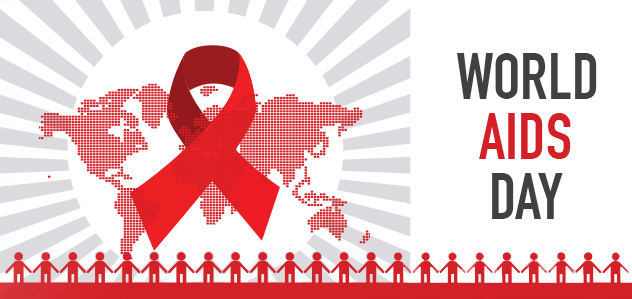
World AIDS Day happens annually on December 1st. It is an opportunity for people from around the world to show support for those living with HIV/AIDS and to raise money and awareness about this disease. Since 1984 when the AIDS virus was first discovered, over 34 million people have died as a result. Despite progress in prevention, treatment, and destigmatization in recent years, thousands of people are diagnosed with HIV/AIDS every year.
What is HIV/AIDS?
HIV (human immunodeficiency virus) is a virus that attacks a certain type of white blood cells that are known as T Cells (CD4 Cells). T Cells are the cells in our bodies that allow us to fight off infection and have immunity to diseases that we have had in the past. The HIV virus uses the mechanisms in these T cells to replicate itself, killing the T Cell in the process. Fewer T Cells means that a person’s body is less able to fight off infection. HIV is spread from certain bodily fluids, such as blood, semen, and vaginal fluid. HIV can also be passed from mother to child.
There are 3 stages of HIV Infection: Acute HIV infection, clinical latency, and AIDS. Acute HIV infection usually happens 2-4 weeks after a person is infected with the HIV virus and is characterized by terrible flu-like symptoms. Clinical latency is the period where a patient likely does not have any symptoms, but can still infect others. AIDS(acquired immunodeficiency syndrome) is the final stage of HIV infection. When HIV has killed enough T Cells that a person’s ‘T Count’ is under 200 cells per cubic millimeter of blood, the patient is diagnosed with AIDS. When a person has progressed to AIDS, they often develop opportunistic infections, which are diseases caused by viruses or bacteria that are rare in people with healthy immune systems. Examples of opportunistic infections are pneumonia, tuberculosis, and Salmonella infection.
Is there a cure for HIV/AIDS?
There is no cure for HIV/AIDS. However, Antiretroviral Therapy (ART) can be used to treat HIV. ART is a combination of multiple medicines, called antiretrovirals, that are taken together. ART is recommended to be started as soon as possible post-diagnosis and has been shown to greatly reduce the rate of disease progression. Before the invention of ART treatment for HIV, the clinical latency period would last an average of 10 years, and an opportunistic infection would cause the death of an AIDS patient. Now however, advances in ART allow most HIV patients to remain in the clinical latency period for many more years without ever progressing to AIDS, and the life expectancy of an HIV positive person becomes the same as a non-infected person if ART is started early.
In addition to ART, HIV-negative people can take Pre-exposure prophylaxis (PrEP) to reduce their risk of being infected with the virus. If taken daily, PrEP can reduce the risk of infection from having sex by more than 90%, and more than 70% from sharing needles. Anyone who may be at risk for infection is recommended to take PrEP; this includes anyone in a partnership with an HIV-positive person, anyone who may have sex with someone who is at a higher risk for infection (men who have sex with men, or IV drug users), and/or anyone who has used IV drugs or been in treatment for IV drug use in the last 6 months. PrEP is covered by many insurance plans, and can only be prescribed by a healthcare provider.
Mabel Wadsworth Center provides confidential and private HIV rapid testing. The Health Equity Alliance (HEAL) does a lot of work within the state of Maine regarding HIV and AIDS. HEAL is also holding a World AIDS Day event on December 1st in Pickering Square. Details are here.
At Mabel Wadsworth Center, our interns are responsible for updating the bulletin board in our waiting room once a month. Past topics have included healthy relationships, safer sex, abortion stories and more. In case you haven’t had the chance to visit us during November, you can read about our bulletin board here. This post is by our fall intern, Meghan Frisard, a student at the University of Maine.
*CW: murder, transphobia
The week of November 14th-20th is Transgender Awareness Week, which serves to help increase visibility of transgender people and inspire action against transphobia and bias. November 20th is the annual Transgender Day of Remembrance (TDoR), a day that honors and remembers the transgender people who lost their lives in acts of anti-transgender violence. The event began in 1999 in San Francisco to remember the life of Rita Hester, a transwoman who was murdered in Boston in 1998. Rita Hester was not, and still is not, a household name, but she was murdered just a month after Matthew Shepard was murdered by homophobic assailants in Laramie, Wyoming. Matthew Shepard, however, often is a household name and the reporting on his murder was widespread and accurate. Many members of the transgender community, in Boston and nationwide, felt that Rita’s death was not publicized in the same way as many murders of cisgender people are and that the reason for this difference was due to transphobia. More about Rita Hester’s murder can be found here.
Of all trans people murdered in America every year, a disproportionate amount of the victims are trans women of color, just as Rita Hester was. The Transgender Day of Remembrance serves to keep us conscious of how transphobic violence is still happening in America, and how many Americans and institutions are unfazed by such violence. Transgender murder victims are often misgendered by the police and media outlets, which makes any accurate data collection of transgender murders challenging. Join us in Bangor to commemorate Transgender Day of Remembrance at UMA-Bangor (the college campus near the airport), information can be found here.
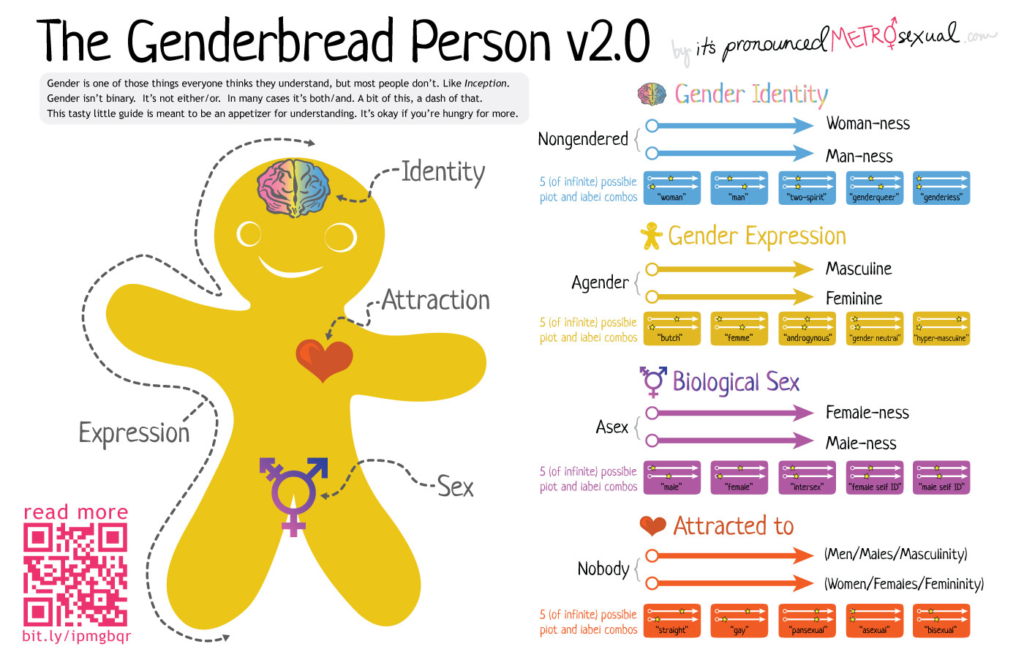
Still unsure what transgender means? Sex, gender, and sexuality are not the same thing. Transgender (or “trans” for short) is an umbrella term that generally encompasses anyone whose gender identity does not correspond with the sex they were assigned at birth. This graphic of a “genderbread person” helps break down these complicated concepts. For more information about transgender people and their experiences, check out this local source: Maine Transnet.
At Mabel Wadsworth Center, we provide hormone therapy for transgender clients and make every effort to ensure our trans clients feel safe. Hormone therapy is an option for transgender people to help them to feel more at ease in their body by taking higher doses of sex hormones (testosterone and estrogen) than what the body naturally produces. Not all trans people choose to take hormones, just as not all trans people choose to have gender-affirming surgery. Providing culturally competent healthcare to the trans community is essential to their health and safety. We are grateful to the Maine Women’s Fund for their generous support in helping us to better serve folks in this community.