Comments Off on Book Report: Becca Rea-Tucker’s “The Abortion Companion”
by Sofia Herrington (she/her), Mabel Wadsworth Center intern
Mabel Wadsworth Center was lucky enough to have multiple copies of Becca Rea-Tucker’s The Abortion Companion: an Affirming Handbook for Your Choice and Your Journey donated to give to patients and keep in our waiting room. Instead of just focusing on how I felt reading through this amazing book, I thought it made more sense to let this powerful piece of writing speak for itself by sharing some of my favorite quotes in the graphics below.
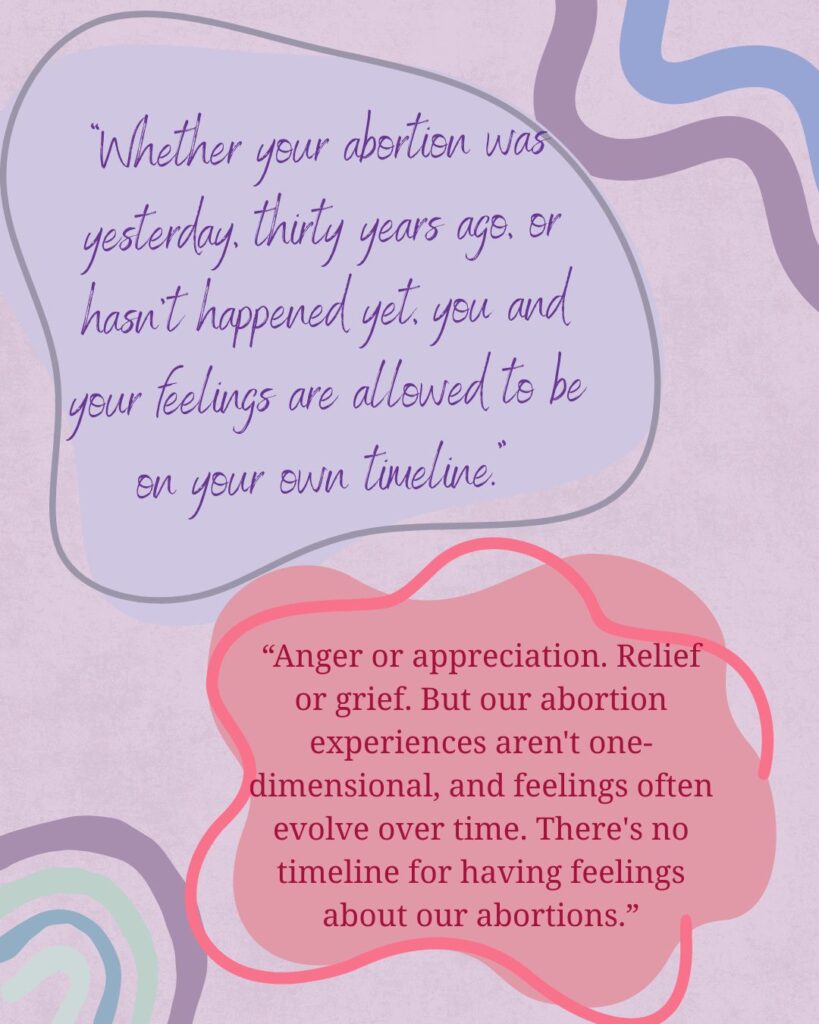
“Whether your abortion was yesterday, thirty years ago, or hasn’t happened yet, you and your feelings are allowed to be on your own timeline.”
“Anger or appreciation. Relief or grief. But our abortion experiences aren’t one-dimensional, and feelings often change over time. There’s no timeline for having feelings about our abortions.”
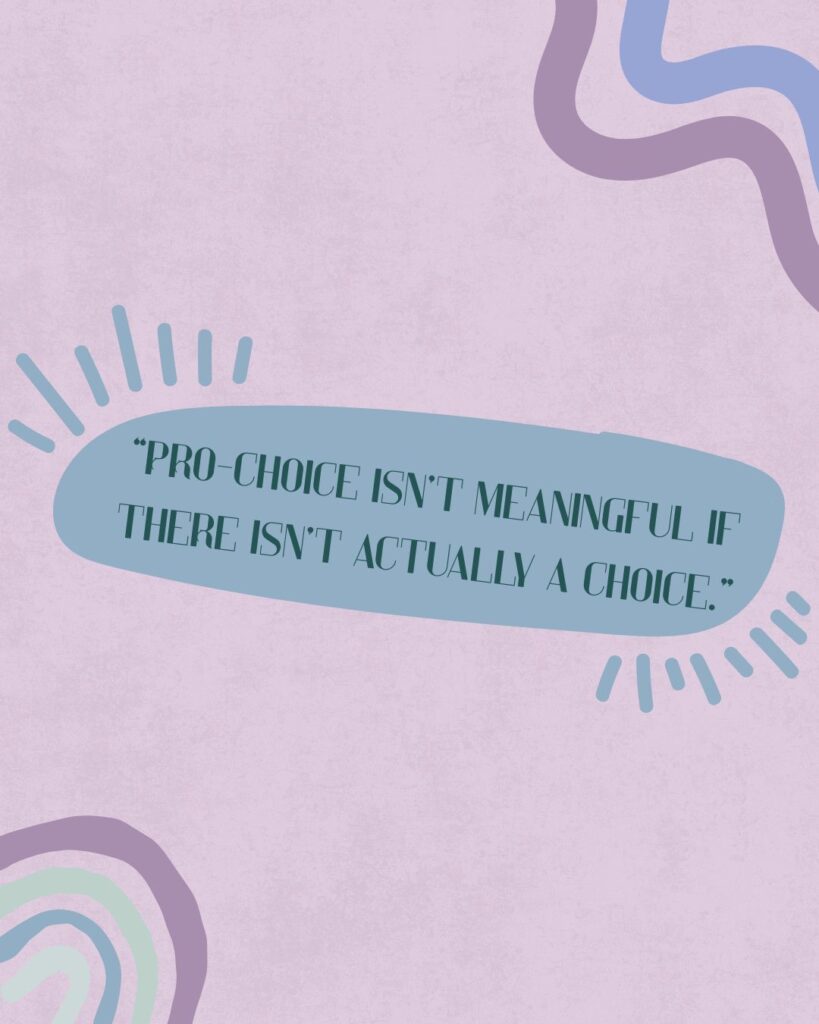
“Pro-choice isn’t meaningful if there isn’t actually a choice.”
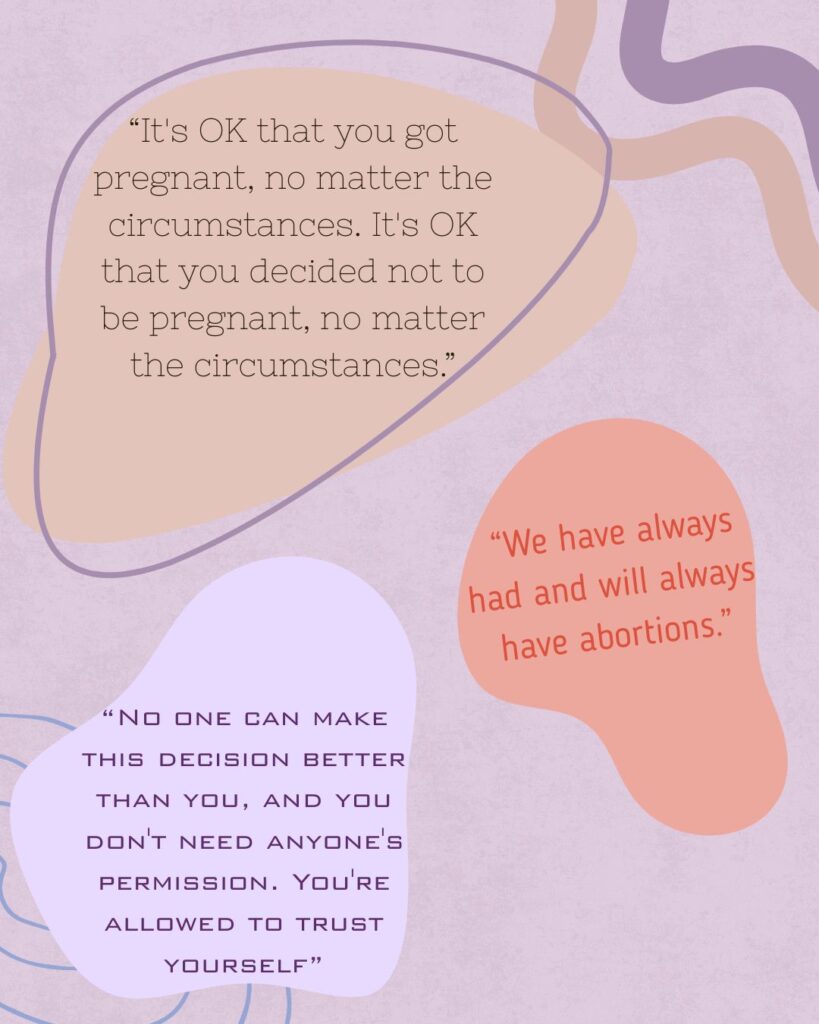
“It’s OK that you got pregnant, no matter the circumstances. It’s OK that you decided to not be pregnant, no matter the circumstances.”
“We have always had and will always have abortions.”
“No one can make this decision better than you, and you don’t need anyone’s permission. You’re allowed to trust yourself.”
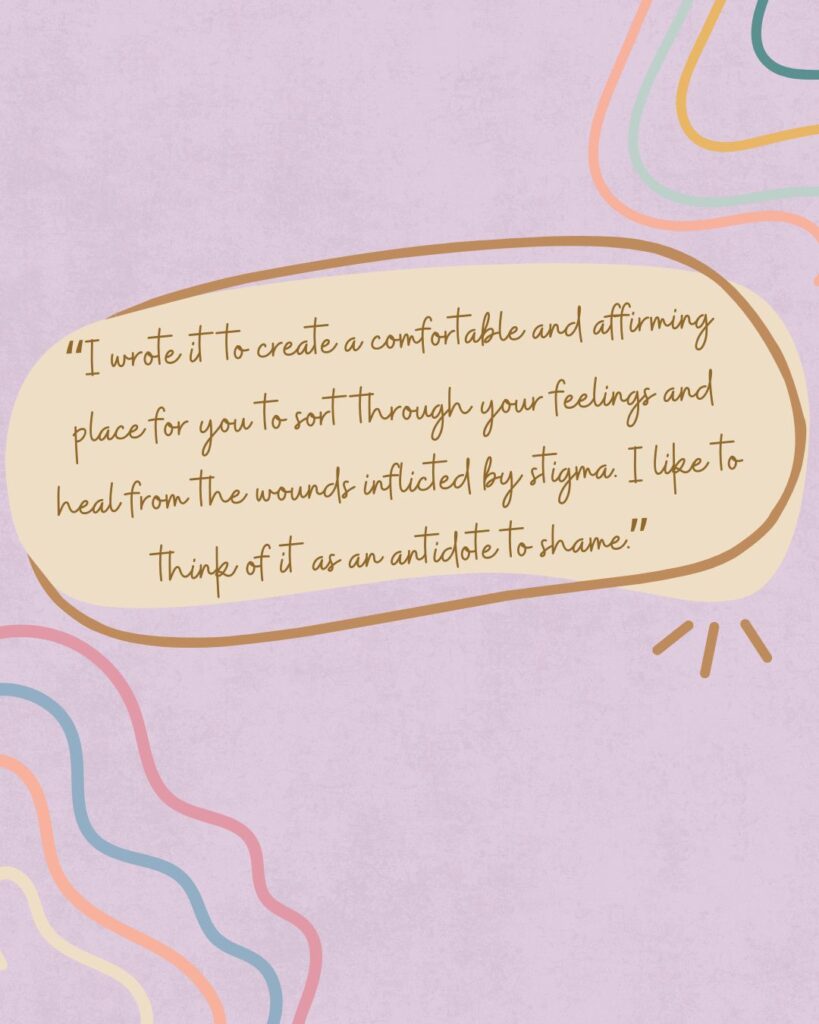
“I wrote it to create a comfortable and affirming space for you to sort through your feelings and heal from the wounds inflicted by stigma. I like to think of it as an antidote to shame.”
Abortions are not only medical procedures, but also often deeply emotional and personal experiences. Time, support, and circumstances have the ability to shape how a person processes their own experiences. This book embraces the different circumstances of abortion, offering a hand of support for anyone– whether they are considering an abortion now, have had one several years ago, or haven’t had one yet. This book creates a safe space to feel all types of emotions and heal themselves, particularly from stigma, without judgment from the world around them.
You can learn more about this book and snag yourself a copy at Becca Rea-Tucker’s website here.
Comments Off on Kink Engagement Among Youth and Concerns
by Danica Soule (they/she), University of Maine Women’s, Gender, and Sexuality Studies student and Mabel Wadsworth Center intern
Language Disclaimer: In this blog, I will be switching between using choking/strangulation – choking is described as something being stuck in your throat, while strangulation is when someone uses an object or their hands to cut off airflow. However, in both the kink community and in common language, “choking” is often the language used. While accuracy is important, it’s also important to use understandable language.
IPV: An acronym for Intimate Partner Violence- Abuse that occurs in a romantic relationship past or present. Abuse can be physical, emotional, sexual, psychological, stalking, financial control, etc.
If you or someone you know is struggling with interpersonal violence, or domestic violence please contact a local help center.
To reach Partners for Peace’s domestic abuse helpline, call 1-800-863-9909.
Now, let’s talk about kinks! Kinks are making their way from private underground parties to your misspelling on a Google search. As technology advances within our society, so does the ability to access just about anything you can think of, and one of these things you can think of is sex. A majority of public schools are underfunded, leaving their sexuality education program at the bottom of the barrel. Alongside underfunding, we see schools that teach abstinence-only sex education, shaming the act of sex, or simply not teaching a sexuality education program at all. Let’s keep in mind that a lack of education does not stop teen pregnancy. In fact, we know this to be a precipitating factor in increasing the rate of teen pregnancy. The lack of comprehensive sex ed programs and funding has the youth searching for any information on the topic of sex out on the internet. Unfortunately when it comes to the internet, when you try to find the answers to your questions like “how to kiss girls,” “how to masturbate,” “how to have sex,” or “how to give a blow job,” the first few links are highly unlikely to be trustworthy, science-based sexual health information, but performative porn instead. When it comes to watching porn, the production of the film is for the entertainment and pleasure of viewers, not for educational purposes. However, with our lack of sex ed, and how taboo the topic of sex is in our culture, young folks can feel as though porn will be the best place to get advice. People, especially those with less experience, can be impressionable, and when they have no basis for the topic they are trying to learn about they will take whatever information they can in hopes that it’s correct.
In porn, even porn that’s not considered kinky (aka “vanilla”), there are acts of erotic asphyxiation. Erotic asphyxiation involves cutting off air supply on either yourself or your partner, to create a sexual thrill between either giver, receiver, or both. This is considered strangulation, but is referred to in the kink world as sexual suffocation/choking. Sexual choking can lead to life-threatening circumstances. It’s essential for anyone engaging in this practice to know how to properly communicate boundaries, safe words/actions, proper and safe techniques, along with consent. These are important factors as well when it comes to engaging in any kinks/play with a partner, but especially kinks that can lead to serious and/or fatal injuries.
Anecdotally, educators/counselors are reporting that youth (12-21) report being strangled/choked unexpectedly by their partner. In one case, an educator had 15 and 16 year old girls asking why boys want to choke them during intimacy and boys asking why girls want to be choked. Now, this question from the boys feels simultaneously disingenuous and genuine. On the one hand, as an analogy, most people wouldn’t watch a bunch of movies where women eat spaghetti and assume all women want to eat spaghetti for every meal, let alone that all women even like spaghetti. On the other hand, our society teaches young men and boys that consent and communication around sex are difficult and complicated, and that many sex acts are to be “assumed” as part of sex. Porn is normalizing rough sex and choking/strangulation to the point where some consider this “vanilla” and young people see this as what the other person presumably wants or what they should be wanting.
Alongside porn, we see the act of sexual strangulation trending on social media platforms like TikTok and Instagram reels, where teen boys and young men make “thirst traps” imitating sexually choking another person. These “thirst trap” videos that sexualize choking/strangulation normalize the act to the viewers without any other context, like how communication and consent should be involved before attempting a risky kink, the importance of not performing these behaviors in public settings, and the fact that these are kinks! These are not vanilla acts that are standard to engage in during sex–these are kinks that need to be discussed (as, frankly, all sex acts should be).
At times, erotic asphyxiation is a disguise for abuse and is NOT being used in a way to bring pleasure to both parties but as a tool of power, control, and violence. Abusers want control over their victims and can disguise their want by using strangulation claiming it’s an act of BDSM to inflict serious pain on their victim. Strangulation is used to instill fear, secure compliance to the abuser, sexual gratification for the abuser, and used to avoid accountability for abusive threatening behavior by avoiding leaving marks.Strangulation is one of the most prominent indicators that abuse in a relationship is escalating to lethal levels and is associated with a “significant predictor of IPV-based homicide”(Mckay). In IPV homicide cases 82% of victims identify with being female, and approximately 15% of these homicides were due to strangulation. Victims who are sexually assaulted by a past or present intimate partner are 8.4x more likely to endure non-fatal frequent strangulation, and the occurrence rate of non-fatal strangulation over the course of a victim’s life can range from 3-68%. Each time a victim survives a non-fatal strangulation, their chances of being a victim to homicide increases.
Instead of normalizing risky sex acts without consent or communication, we need to normalize conversations. It can be hard to answer these questions, and even harder to hear them be asked, especially as BDSM-play trends around social media. We know porn can be harmful and that it’s easy to shift the blame onto the internet, but we also know that shaming those who lack healthy resources won’t make them stop what they’re doing. Shame leads to guilt, repression, and anger. Fighting against rape culture and the normalization of violence along with removing shame around sex generally allows everyone, especially those with less experience, the space to ask questions, learn, and communicate in healthy ways.
Comments Off on Mabel Wadsworth Center Statement Regarding EMTALA
We are horrified and appalled that the Trump administration has made the unconscionable decision to revoke the guidance under EMTALA requiring hospitals to provide emergency abortion care for patients even in states where abortion is banned. The medical care available to someone should not depend on their ZIP code. An individual’s autonomy should not depend on their ZIP code. The inherent humanity of pregnant people should not depend on their ZIP code.
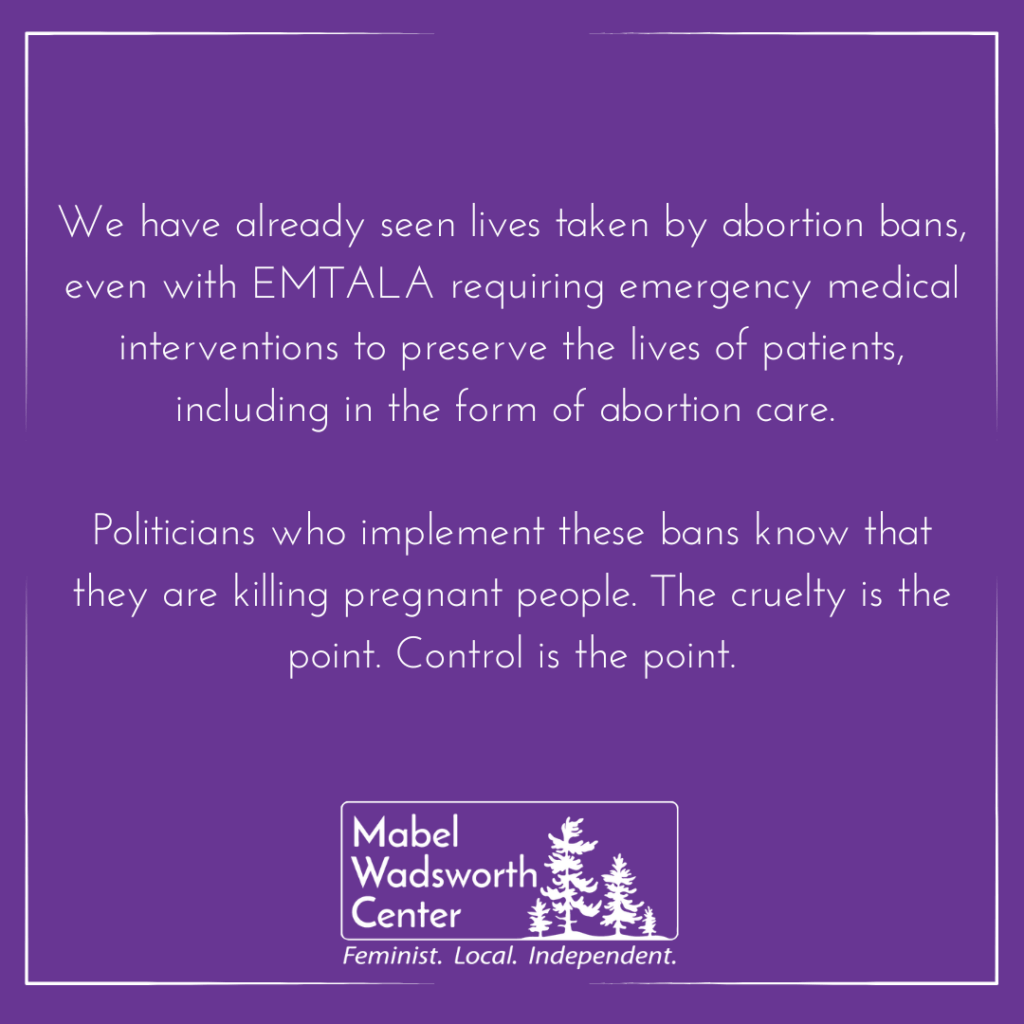
We have already seen lives taken by abortion bans, even with EMTALA requiring emergency medical interventions to preserve the lives of patients, including in the form of abortion care. Politicians who implement these bans know that they are killing pregnant people. The cruelty is the point. Control is the point.
Abortion remains legal and available in Maine, including at Mabel Wadsworth Center. We are honored to provide this normal, needed care.
Comments Off on If you actually care about cis women’s safety, you have to care about trans women’s safety
Aspen Ruhlin (they/them) Mabel Wadsworth Center Community Engagement Manager
Transphobia causes significant harm to transgender people across the spectrum, whether in the form of physical violence or social othering, and many things in between. This fact is enough reason to take action and oppose this hate. While all trans people are harmed by transphobia, trans women and transfeminine folks often face the brunt of this harm, as they are most often the victims of transphobic violence and are frequently targeted socially and with anti-trans legislation. We’ve seen this targeting across the country and here in Maine, with the harassment and doxxing of a trans minor by a certain State Representative and the multiple pieces of proposed legislation attacking trans women and girls in sports. It is abhorrent, and it is inexcusable.
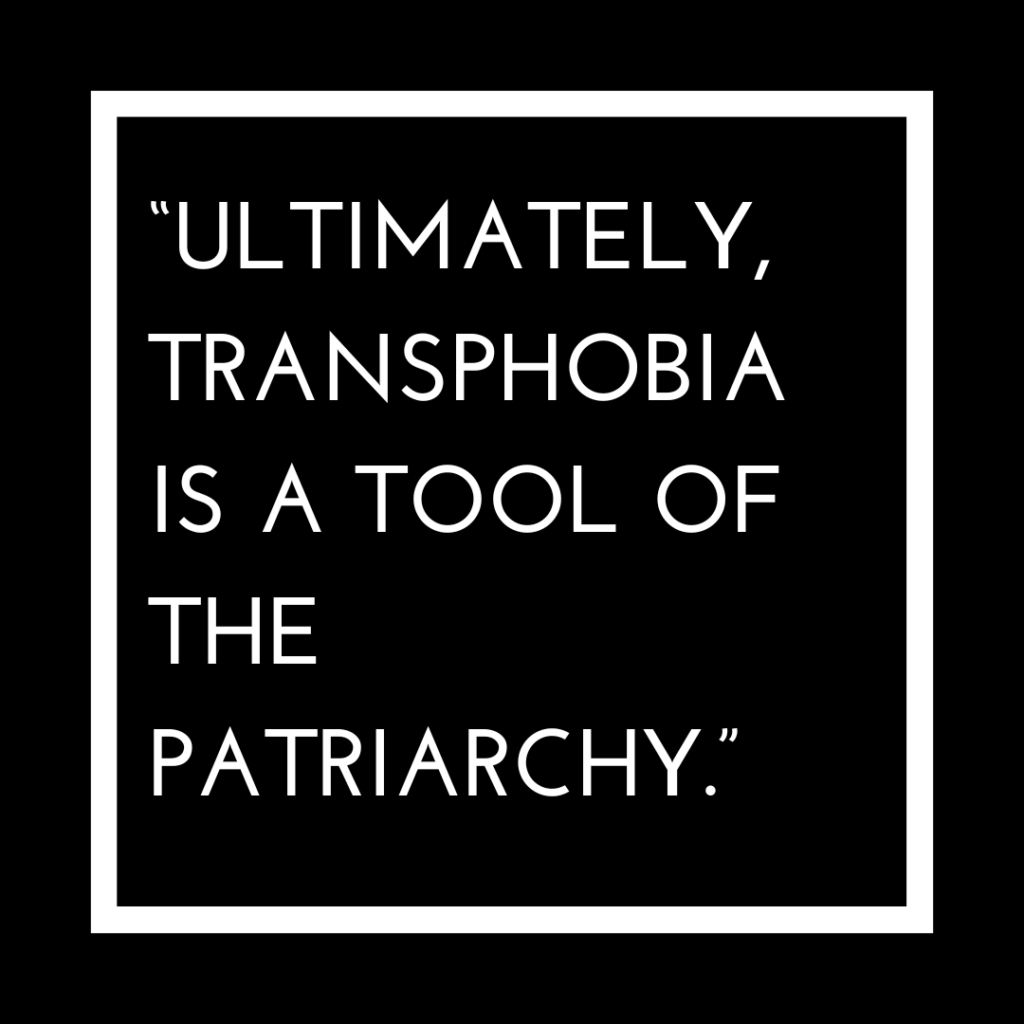
Harm to trans people is enough reason to oppose transphobia in any form, but we know that hate harms more than its named targets. We have seen time and again cis people, particularly cis women, harmed by misdirected transphobia. This makes perfect sense when we remember that, ultimately, transphobia is a tool of the patriarchy.
Patriarchal power structures demand an adherence to a rigid binary that simply doesn’t exist in nature. If this rigid binary did exist naturally, no one would have to try to force themselves or others into it. In this system, women are expected to be petite, weak, lacking in body hair, and more. These characteristics, along with being rooted in white supremacy, either require significant effort to achieve, like hair removal, or are just not possible for many women to fit into. Plenty of cis women are tall, like Gwendoline Christie and Meg thee Stallion, and will never fit the patriarchy’s rigid notion of acceptable womanhood. With Meg thee Stallion in particular and her experience as a tall Black woman, we see the intersections of misogyny, misdirected transphobia, and racism.
Transphobia is a tool of the patriarchy to police all women’s bodies, trans and cis alike. We saw this play out on a global stage in the 2024 Summer Olympics with the “transvestigation” of Imane Khelif, an Algerian women’s boxer who was accused of being trans for not fitting white notions of femininity. Recently, a cis woman was kicked out of a bathroom in Boston after being falsely accused of being trans. It’s important to note that it is legal for trans people to use the bathroom associated with their gender in Massachusetts.
As transphobia gains more visibility, we unsurprisingly see more cis women experiencing misdirected transphobia. Trans people are the named target of transphobia, but transphobia works to control cis people as well, forcing them to either adopt narrow expressions of gender or risk harassment. Even when misdirected transphobia isn’t on the table, the same patriarchal values that uplift transphobic beliefs harm cis people, particularly cis women. One example of this is physical strength. We are bombarded with messages from birth that women are inherently weak, though we know this isn’t true. When women are discouraged from being strong, who benefits?
Every attempt at defining womanhood in a way to exclude trans women also excludes countless cis women. Every attack on trans women is a direct attack on countless cis women and an indirect attack on the rest. If you actually care about cis women’s safety, you have to care about trans women’s safety.
Comments Off on Organizations Unite to Condemn Harassment of Maine Youth
FOR IMMEDIATE RELEASE:
February 25, 2025
Organizations Unite to Condemn Harassment of Maine Youth
Coalition stands together to call for adults to protect children from harassment
AUGUSTA, ME – Last week, an elected official used her online social media to share a photo of a child that she identified as transgender, resulting in statewide and national harassment of a non-consenting minor.
Our organizations stand united in declaring that adults should never harass, ‘out’, or instigate attacks on minors. All children deserve our safety and protection, so they can feel safe at home, at school, and in their communities.
This year, dozens of bills have been filed that seek to threaten, roll back, or undermine the rights of trans people in our state. As these bills go through their hearings, language will get heated and tempers will get high. We urge legislators and Legislative leadership to remember that children and private citizens are off-limits, and personal attacks go against Maine values, basic decency, and endanger families. It is never okay for people in positions of power to use their roles to draw attention or harassment toward people who are just trying to live their lives with privacy and safety.
We all want what’s best for our children. We expect our leaders will have a plan to keep the focus on the policy, not on personal attacks, and to hold policymakers accountable when their actions cause harm.
Affirming Behavioral Health affirmingbehavioralhealth.org
Campfire Institute campfireinstitute.org
Confluence Collective
confluencecollective.org
Defend Our Health
defendourhealth.org
Equality Community Center eccmaine.org
EqualityMaine
equalitymaine.org
Grandmothers for Reproductive Rights grrnow.org
Hardy Girls hardygirls.org
Kindling Collective kindlingcollective.org
Little Chair Printing littlechairprinting.com
Mabel Wadsworth Center mabelwadsworth.org
Maine Chapter, American Academy of Pediatrics maineaap.org
Maine Children’s Alliance mainechildrensalliance.org
Maine Council of Churches
mainecouncilofchurches.org
Maine Equal Justice maineequaljustice.org
Maine Family Planning mainefamilyplanning.org
Maine Medical Association mainephysicians.org
Maine Osteopathic Association mainedo.org
Maine Public Health Association mainepublichealth.org
Maine Women’s Lobby mainewomen.org
Maine Youth Power maineyouthpower.org
MaineTransNet mainetrans.net
Multi-faith Justice Maine mainepeoplesalliance.org
NASW Maine Chapter naswme.socialworkers.org
OUT Maine outmaine.org
Planned Parenthood of Northern New England ppnne.org

 “It’s OK that you got pregnant, no matter the circumstances. It’s OK that you decided to not be pregnant, no matter the circumstances.”