
Abortion is legal in Maine! Learn More

Author Archives: astrout

  1. Testimony in support of LD 37

    Comments Off on Testimony in support of LD 37

    On February 5, 2019, our intern, Aiden Ciaffaglione from the University of Maine, testified at the Maine State House in support of LD 37 “An Act to Allow for the Sale of Nonprescription Drugs through Vending Machines.” Below is his testimony.

    LD 37 – Ought to Pass

    To the Joint Standing Committee on Innovation, Development, Economic Advancement and Business speaking in support of LD 37 “An Act to Allow for the Sale of Nonprescription Drugs through Vending Machines”

    Senator Herbig, Representative Larson Daughtry and members of the Joint Standing Committee on Innovation, Development, Economic Advancement and Business, my name is Aiden Ciaffaglione and I am here today to testify in support of LD 37 An Act to Allow for the Sale of Nonprescription Drugs through Vending Machines.

    I am a student at the University of Maine and an intern with the Mabel Wadsworth Center, a sexual and reproductive healthcare provider in Bangor. At the University of Maine, I am involved in several student organizations, but, most importantly, I am a Resident Assistant in my residence hall. In this position, I offer on-campus residents resources to help them adjust to college living, while also developing a safe and inclusive community. The students I work with commonly come to me with concerns over their lack of financial stability and access to reproductive health resources.

    As their RA, I try my absolute best to provide them with as many resources as possible in order to better their experience at college; but, being a student myself, there is only so much I can do. This bill will allow students to lessen their stress about accessing resources for safer sex and allow them to redirect their focus onto their studies.

    Within my first semester of being an RA, I had the experience of supporting several students through the strenuous process of trying to access emergency contraception. One distinct memory I have was on a Friday night at approximately 11:30 pm, when one of my male identifying residents knocked on my door almost in tears because he was afraid he did not have options to help his girlfriend. He explained that they were using a university-provided condom, but it broke, creating a panic over the possibility of a pregnancy.

    I managed to scramble together some information about Mabel Wadsworth Center and other nearby clinics that could help and gave him some information on accessing Plan B. The only problem was that pharmacies were not open and he had no way of getting to a store the next day.  He looked into the health center on our campus, but they did not provide the emergency contraceptive, and they did not have walk-ins readily available on the weekends.

    He and his partner had to take a bus into Bangor and walk to every store, but no one had Plan B available. They finally found the pill on the shelf of a Target pharmacy, where there were only 3 boxes left. What would have happened if they were the fourth couple to come in that day looking for Plan B? These are not issues that students should be facing, nor do I want my residents to ever encounter them. They should be focusing on the education they are paying for and not panicking about accessing healthcare.

    I support this bill for my own reproductive health and the health of my residents because we deserve better access to contraceptive and sexual health resources on campus. No student should feel as though they have no backup options when being faced with the possibility of pregnancy, and they should have options for safer sex readily available on campus.

    Thank you for your time, and I hope that you will vote “Ought to Pass” on LD 37 for the wellbeing of the students at all Maine universities.


  2. Safe and Healthy Relationship Advice for this Valentine’s Day

    Comments Off on Safe and Healthy Relationship Advice for this Valentine’s Day

    At Mabel Wadsworth Center, our interns are responsible for updating the bulletin board in our waiting room once a month. In case you haven’t had the chance to visit us recently, you can read about our bulletin board here.  This post is by our intern, Thomas Witten, a student at the College of the Atlantic.

    Valentine’s Day is exciting for some and aggravating for others. If you are in a relationship, casual or otherwise, it’s a great time of year to do a quick refresher on safer sex and relationship practices. And what could be more romantic than checking in on you and your partner’s (or partners’) sexual and emotional health?

    Healthy Relationships:  Everyone deserves a healthy relationship, and healthy relationships, both sexual and otherwise, are vital for psychological wellbeing and happiness. Here are some important aspects of healthy relationships:

    1. Mutual respect.
    2. Honest verbal communication and actively listening to what your partner is saying both verbally and non-verbally.
    3. Supporting and respecting each other’s wishes, goals, and needs. You can support and respect them without sharing the same ideas.
    4. Supporting and respecting each other’s likes and hobbies, even if they are not the same as yours.
    5. Providing space: You can’t expect someone to spend all of their time with you. Just because someone is seeking their own space doesn’t mean they don’t love you.
    6. Self-respect and care: While it’s good when someone makes you happy, your happiness should not be entirely dependent on your partner. Taking time to do the things that you like and practicing self-care will only improve your relationship.

    Consent in Relationships: Consent is an important aspect of sex and intimacy, even in long-term relationships. Deciding if you want to have sex, when you want to have sex, and what kind of sex you want to have are all things that should be discussed and agreed upon together. You always have the right to say no, even to a long-term partner/partners and even if it’s an act you have done before.

    Once you’ve established consent, with either your long-term or short-term partner(s), it’s time to get down to business. But wait! Even ignoring the reality of unwanted pregnancy, there are still many risks to consider when having sexual encounters. Practicing safer sex can help alleviate those risks, though never completely.

    Safer Sex: Practicing safer sex requires just three easy steps:

    1. Use barriers during sex, like condoms and dental dams.
    2. Get tested: It is recommended that you get an STI screening and a sexual health exam once every year or after each new partner. Go with your partner(s) and get tested together!
    3. Make lifestyle choices that limit your exposure to infection: This can include limiting new sexual partners, not sharing supplies or stopping intravenous drug use, and using clean needles/supplies for tattoos, drug use, etc. Staying healthy and keeping your immune system strong are also a big help. (Taken from Corinna, Heather. S.E.X. Boston: Da Capo Press, 2016)

    What are these risks we are trying to avoid? Sexually Transmitted Infections, of course! In the last few years, Maine has seen a distinct rise in the rate of Sexually Transmitted Infections (STIs for short, though they are sometimes referred to as Sexually Transmitted Diseases or STDs).

    Common Sexually Transmitted Infections:

    STIs are quite common, and there is no shame in having one. Most STIs are transmittable even when they are not presenting symptoms, so active prevention through barriers (like condoms and dental dams) is quite important. They are also generally easier to treat the sooner they are diagnosed, so routine testing is highly recommended. Below is a list of the most common STIs in Maine:

    • Chlamydia: around 4,000 new cases in Maine in 2015
    • Gonorrhea: around 420 new cases in Maine in 2015
    • Syphilis: around 50 new cases in Maine in 2015
    • HIV: around 50 new cases in Maine in 2015
    • Herpes: around 1 in every 4 people has genital herpes

    Should I get tested?

    If you have ever had sex or have been sexually assaulted, you are at risk for an STI and should consider getting tested. This is a routine, non-invasive procedure that can help keep you and your community be safer. People at particular risk are young people, those with multiple sexual partners, men who have sex with men, and people who use intravenous drugs (who have an increased risk for HIV and Hepatitis C). It is recommended that sexually active people and people who use drugs get routinely tested once every year and whenever they begin with a new sexual partner.

    If you and your new partner plan to begin having unprotected sex or start using non-barrier based birth control, it is a good idea to get tested together before starting! It’s a quick and easy way to reduce your risk. Remember that many STIs don’t show physical symptoms, but can have long term negative health impacts (including increased risk of cancer, infertility, and complications during childbirth and pregnancy), so getting tested is an easy way to find out if you already have an STI.

    Mabel Wadsworth Center provides STI testing and care, birth control services, LGBTQ+ healthcare, and mental health counseling in a client-centered and safe environment. Show your partner(s) you care about their wellbeing, and come get tested today!


  3. Cervical Health Awareness Month 2019

    Comments Off on Cervical Health Awareness Month 2019

    This post was written by Nik Sparlin (they/them/theirs), the Communications and Development Assistant at Mabel Wadsworth Center.

    January is a month of new goals, preparation for the year to come, and (if you couldn’t already tell by the name of this blog post) it’s also Cervical Health Awareness Month!

    So how can you optimize your cervical health? The answer is actually pretty simple: Vaccinate and get screened regularly.

    Getting the HPV Vaccination can help prevent you from getting infected by both high-risk types of HPV that can lead to cervical cancer and low-risk types that can lead to genital warts. Children ages 11 and 12 are recommended to get the vaccine in two doses. For those who are 15 to 45, three doses are required to make the vaccine effective.

    Getting screened regularly involves seeing your sexual and reproductive healthcare provider for an annual wellness exam. Pap smears should be done once every three years for anyone with a cervix from ages 21 to 65. (If you have had an abnormal pap result, your provider may recommend getting them done more often.) A pap test allows your provider to screen for cervical changes that could lead to cervical cancer. When detected early, these changes are nearly 100% curable!

    Starting at age 30, you have more options, according to the CDC: You can either continue to get a pap smear once every three years, you can get a pap with an HPV test every five years, or you can get an HPV test every five years. At Mabel’s, we provide HPV screenings with pap tests.

    The Maine CDC has a program that helps low-income folks to get free or low-cost breast and cervical cancer screenings. Follow this link to find out more about the program and to see if you qualify.

    But annual exams can offer more than just pap smears. At Mabel Wadsworth Center, our annual wellness exams may involve doing a general wellness check (ex: blood pressure, height/weight, anemia screening), clinical breast and pelvic exams, STI testing (which should be done annually for anyone who engages in sexual activities), and is also a great time to go over birth control and other aspects of your sexual and reproductive health. The services that we provide at your visit are up to you, depending on what you decide is best for your needs.

    Our providers specialize in reproductive and sexual health, and our client-centered mission means that your input is key: We put people in charge of their healthcare and are glad to give you the time and space you need to ask questions. You can learn more about our providers here.

    To schedule your annual exam at Mabel Wadsworth Center, call (207) 947-5337 or email info@mabelwadsworth.org. We accept private insurance and MaineCare and are happy to offer reduced fees through MabelCare for uninsured clients.

    Have a happy and healthy 2019!

  4. Transgender Day of Remembrance

    Comments Off on Transgender Day of Remembrance

    At Mabel Wadsworth Center, our interns are responsible for updating the bulletin board in our waiting room once a month. Past topics have included healthy relationships, safer sex, abortion stories and more. In case you haven’t had the chance to visit us recently, you can read about our bulletin board here.  This post is by our intern, Maura Philippone, a student at the University of Maine.

    What is TDOR?

    Transgender Day of Remembrance (TDOR) is an annual vigil that commemorates people who have lost their lives to transphobic acts of violence. Most TDOR vigils involve reciting a list of names of all known transgender people who have been murdered within the past year. At the event, prayers, speeches, and singing are common.


    How did TDOR start?

    The first TDOR was a candlelight vigil led by Gwendolyn Ann Smith in San Francisco, CA in 1999. It was held in response to the murder of a trans woman named Rita Hester on November 28th, 1998. This vigil commemorated all the people who were killed by transphobic acts of violence after Rita’s death. Since then, annual TDOR vigils have gradually grown to become the somber and sometimes angry vigils that they are today.


    How is the list of names created?

    The list of names incorporates those who have been killed between November 20th of the previous year and November 19th of the current year (for the 2018 TDOR vigil, that’s 11/20/2017 to 11/19/2018). It can include hundreds of people, and many believe that it is not completely accurate due to underreporting.

    Trans* Women of Color (TWOC) make up the vast majority of the list. This unfortunate fact is directly connected to the intersectional identities of TWOC that often leave them vulnerable to perpetrators of violence. TWOC regularly experience misogyny, transphobia, racism, and violence resulting from these prejudices. This is why recent TDOR vigils have also included racial justice actions (such as protests). The U.S. list can be found on the Human Rights Campaign website, and the international list can be found on the International Transgender Day of Remembrance website.

    Stats and facts:

    • A 2016 Pew Poll investigated the percentage of Americans who personally know someone who is transgender. 37% of those ages 18-29 said yes, whereas only 16% of those ages 65 and older said yes.
    • In 2017, at least 29 transgender people were killed by transphobic acts of violence in the U.S. This was alarming in that it was a record high. The perpetrators of this violence were acquaintances, partners, and strangers to the people that they killed. Some have been arrested and charged, while others have yet to be identified.
    • So far, 24 transgender individuals have been killed by transphobic acts of violence in the U.S. in 2018.
    • A ProPublica report found that, in the U.S., victims were identified with names or genders that did not correspond to those they used in their daily lives in 74 out of 85 cases.

    Will there be a TDOR vigil near me?

    • Orono, ME: UMaine’s Wilde Stein: Queer Straight Alliance will be holding a TDOR vigil on Friday, November 16th at 8 pm on the university mall.  
    • Bangor, ME: MaineTransNet will be holding a TDOR vigil on Saturday, November 17th from 7:30pm-9:30 pm at the Bangor Area Recovery Network (142 Center Street, Brewer, ME 04412)

    Call MaineTransNet at (207)-370-0359 for information about TDOR vigils in other locations in Maine.

    How can I be a better trans ally?

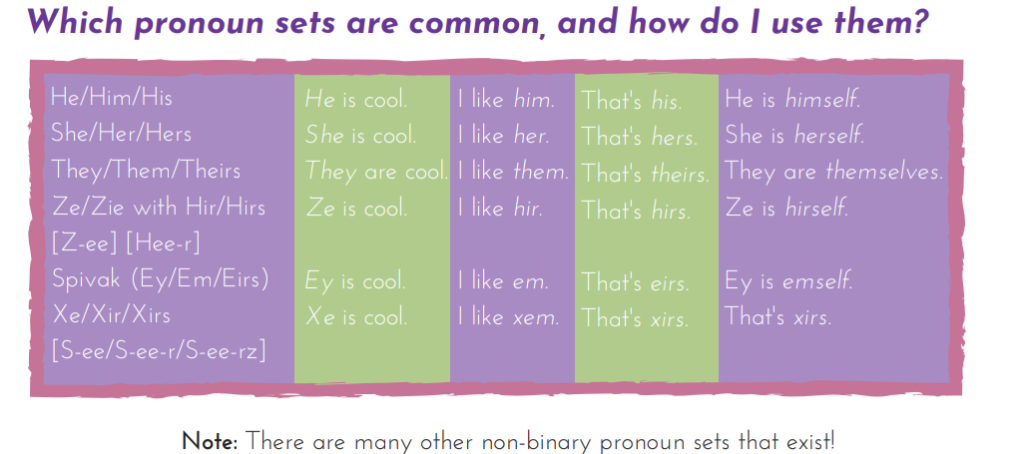
    Using a person’s correct pronouns is a good start! If you don’t know what pronoun set someone uses, just ask. You can even break the ice and introduce yourself with your pronouns first (e.g. “Hi! My name is Maura and my pronouns are she, her, and hers!”).  

    If you don’t need to know a person’s gender, you don’t need to ask them. Instead, just use gender-neutral language, like “They said…”. Here are some examples of a few different pronoun sets and how to use them:

    If you make a mistake, it’s not the end of the world! Simply apologize, correct yourself, and move on. Dwelling on it makes the situation more awkward and pressures the person you misgendered to play it off or apologize to make you feel better. So, just correct yourself and move on!

    To learn more about pronoun sets and how to practice using preferred pronouns, check out our handy Pronoun Usage Guide!

    Sources:

    http://www.mainetransnet.org/transgender-day-of-remembrance/

    https://www.glaad.org/tdor
    https://tdor.info/statistics/

    https://transgenderdordotcom.files.wordpress.com/2014/10/tdortips.pdf

    http://www.pewforum.org/2016/09/28/5-vast-majority-of-americans-know-someone-who-is-gay-fewer-know-someone-who-is-transgender/

    https://www.hrc.org/resources/violence-against-the-transgender-community-in-2018

    https://www.aclu.org/blog/lgbt-rights/criminal-justice-reform-lgbt-people/deadly-violence-against-transgender-people-rise

  5. As a survivor, I firmly stand with Dr. Christine Blasey Ford

    Comments Off on As a survivor, I firmly stand with Dr. Christine Blasey Ford

    Nik Sparlin spoke at our press event and rally to support Dr. Christine Blasey Ford and stop Judge Kavanaugh’s nomination on September 20, 2018, outside Senator Collins’ office in Bangor. 

    Thank you all for being here today in support of survivors and in using your time to take a stance against the nomination of Brett Kavanaugh to the Supreme Court of the United States.

    My name is Nik Sparlin. I am 25 years old, a current student, an active participant and member of the Queer community, a feminist, and a survivor of multiple instances of sexual violence.

    I first experienced trauma at the hands of my biological father when I was three years old -an important time in childhood development when we begin to form the basis for the people we will become through our experiences. During my formative years, my father used physically abusive tactics in order to silence me through grooming, a process through which a predator isolates and gains the secrecy of a victim through various tactics in order to initiate sexual abuse and control.

    There is much that I am happy to never remember because of how early the instances of sexual and physical abuse occurred, but the pieces that I do remember will always follow me.

    Trauma is pervasive and lasting, though it ebbs and flows on any given day. It affects how we relate to others, with the world, and how we relate to ourselves. My childhood trauma greatly affected my levels of self-esteem and self-worth, creating a vulnerability that could be exploited in the wrong hands: I couldn’t love myself enough to advocate for myself, or to think that my story was worth telling.

    Seventeen years later, I was sexually assaulted by a partner that I trusted when I was under the influence and could not give my consent. The memories of what happened that night are hazy at best, and the thought of them makes me sick to my stomach. I remember being rendered useless on the couch for what felt like hours, and eventually being taken to my house by him, still incoherent. I remember pieces of my assault and how strange my head felt when I was jostled and manipulated on my own bed. But what I remember most is waking up the next morning with the confusing feelings of betrayal, conflict, and guilt; I felt like it was my fault because I couldn’t remember if I had explicitly said “no.”

    There are many people who would be happy to rest the blame on me for what happened that night. They will say that it was my fault for being too high and my consent was somehow “implied” because I was assaulted by someone that I was seeing. They will say that I am lying because I can’t remember all of the details and because I never reported it or shared my story until now, when even saying things like these makes survivors like me fearful to come forward with our experiences.

    It is truly astounding to me that in the era of #metoo, decades after Anita Hill and the “Year of the Woman,” that we still have issues trusting and believing survivors. Being a survivor, someone who has had to reconcile with the pervasive trauma of abuse and assault, this is something I cannot abide by, and it is why I am sharing my story today -because this has happened time and time again to too many people.

    As a survivor, I am here to tell anyone who has faced sexual violence that I hear you and I believe you, no matter what gender you are, who you are attracted to, how you were dressed, what substances you may or may not have been under the influence of, or if you didn’t report your assault.

    As a survivor, I firmly stand with Dr. Christine Blasey Ford as she faces retaliation and an onslaught of threats from being forced to come forward publicly with her allegations against Brett Kavanaugh.

    And as a survivor, I am calling on Senator Susan Collins and the rest of our political leaders to believe Dr. Ford and to take her allegations seriously because recounting these stories is a difficult and truly courageous act.

    Thank you.